
12 supporters attended "Hands off our buses, hands off our homes!"
To: Lisa Evans, Chief Executive Officer of Scope
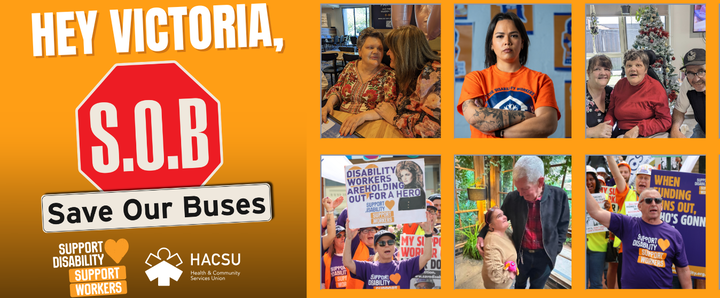
Save Our Buses - Stop the Scope Transport Sell-Off!!

.png)
We, the undersigned, call on Scope to immediately halt the sale of disability transport buses and reverse its decision to withdraw accessible transport from supported accommodation residents.
The removal of these buses represents a significant reduction in essential supports for people with disability, stripping away a service that many rely on every day to attend medical appointments, access community activities, go shopping, maintain social connections, and live with dignity and independence.
The removal of these buses represents a significant reduction in essential supports for people with disability, stripping away a service that many rely on every day to attend medical appointments, access community activities, go shopping, maintain social connections, and live with dignity and independence.
For residents with complex mobility, communication, behavioural, or support needs, accessible buses are not optional — they are critical. Replacing reliable, familiar transport with taxis, rideshare services, or public transport places an unfair burden on residents and families, while creating confusion, stress, and serious barriers to participation.
Many residents will face increased isolation, missed appointments, reduced access to their communities, and heightened risks to their wellbeing as a result of this change to put it simply - it is heartless.
Families, people with disability, disability support workers, advocates and community members are not copping it.
Many residents will face increased isolation, missed appointments, reduced access to their communities, and heightened risks to their wellbeing as a result of this change to put it simply - it is heartless.
Families, people with disability, disability support workers, advocates and community members are not copping it.
Scope’s decision shifts responsibility for transport onto individuals, despite major inconsistencies in funding, accessibility, reliability, and availability. Public transport is not accessible or practical for everyone, and taxis are often unpredictable, unsuitable, or unable to meet the needs of people requiring specialised supports. The withdrawal of buses risks creating a two-tiered system where only those with sufficient funding or informal supports can maintain the same quality of life.
We urge Scope and the Victorian State government to prioritise dignity, safety, accessibility, and genuine inclusion by retaining disability transport buses and guaranteeing equitable, reliable transport for all supported accommodation residents.
Why is this important?
This issue matters because transport is not optional for people living in supported disability accommodation — it is a fundamental support that determines whether people remain connected to their communities or become isolated within their own homes. For many residents, these buses are the only safe, reliable, and accessible way to attend medical appointments, participate in community activities, visit loved ones, shop for essentials, and maintain the independence, dignity, and routine that most people take for granted.
The sale of these buses risks dramatically reducing residents’ access to healthcare, social participation, and community connection, increasing loneliness, dependence, and exclusion. Without reliable transport, people may miss appointments, withdraw from activities, lose confidence, and experience a serious decline in quality of life. For some, this decision could effectively leave them trapped at home, prisoners in their own accommodation with little meaningful access to the outside world.
What makes this decision even more concerning is that these buses were originally provided to Scope at no cost by the Victorian State Government to support inclusion and community access for people with disability.
Selling off assets intended to improve the lives of supported independent living residents, while withdrawing a critical service many depend on, sends a troubling message about priorities particularly on the backdrop of the Victorian Disability Sector Crisis.
Share this petition to demand that Scope halt the sell off and the Victorian State government intervene!
Selling off assets intended to improve the lives of supported independent living residents, while withdrawing a critical service many depend on, sends a troubling message about priorities particularly on the backdrop of the Victorian Disability Sector Crisis.
Share this petition to demand that Scope halt the sell off and the Victorian State government intervene!
How it will be delivered
In person at the Scope head office in Hawthorn, Victoria - watch this space to save the date!