-
 Stand Up For Tasmanian NursesNurses are the backbone of Tasmania's health system. When wards are understaffed and nurses are stretched thin, it's not just nurses who feel it, it's every Tasmanian who relies on a hospital bed, an emergency department, or a clinic appointment when they're at their most vulnerable. This isn't just about pay. It's about: • Safe staffing levels, so nurses aren't stretched across too many patients at once • Retaining experienced nurses, instead of losing them to burnout or interstate jobs with better conditions • A functioning public health system that Tasmanians can rely on in an emergency • Fair recognition for a workforce that shows up through every crisis, every night shift, every understaffed ward1 of 100 SignaturesCreated by Health and Community Services Union TAS (HACSU)
-
 Support your Nurses and Midwives: We can't hold on foreverNurses and midwives work across our hospitals, health centres, remote communities, maternity services, mental health services and community care. They are an essential part of the health system, but the Territory must be able to attract experienced staff, retain the workforce it already has, and provide working conditions that allow people to build long-term careers here.367 of 400 SignaturesCreated by ANMF NT
 -
 Stop the Tasmanian Industrial Commission (TIC) changes that silence nurses and midwives!Proposed changes risk: • Silencing workers by limiting their ability to speak publicly about workplace concerns • Extending dispute processes unnecessarily • Increasing legal and procedural barriers that disadvantage working people • Undermining good faith bargaining At a time when Tasmania faces workforce shortages and increasing health system pressures, the Tasmanian Government should be strengthening collaboration, not weakening the rights of healthcare workers. Nurses and midwives advocate not only for ourselves, but for patient safety and community wellbeing. Any industrial framework that discourages speaking up puts patients at risk. We call on the Tasmanian Government and Minister Guy Barnett to: 1. Commit to keeping the Tasmanian Industrial Commission as a stand alone body 2. Publicly rule out measures that silence or penalise healthcare workers for raising safety concerns Tasmania’s nurses and midwives deserve a fair system. Our patients deserve a strong voice for safety.234 of 300 SignaturesCreated by ANMF Tasmania
-
 Australian healthcare workers will not be silenced!As healthcare workers, we emphatically reject antisemitism, anti-Palestinian racism, Islamaphobia, racism and all forms of discrimination and hatred. Every healthcare worker, patient, carer and community member deserve safety, dignity and equal access to treatment, care and support - Jewish people, Palestinian people and all communities affected by conflict, violence and war. Antisemitism is real, harmful, and must be confronted wherever it occurs. That is not what this decision does. What it does instead is import a definition whose own illustrative examples concern the State of Israel and its policies, blurring the line between antisemitism and legitimate criticism of a government and its policies. We state loudly and clearly that criticism of the State of Israel, its government, military actions against civilians, healthcare workers and healthcare facilities and speaking out on Palestine is not antisemitic. We oppose any regulatory framework that could deter healthcare workers from engaging in lawful advocacy for human rights, humanitarian protection, civilian safety, or accountability under international law. Professional registration must never become a mechanism for political silence. This decision is a dangerous and pernicious attempt to silence health professionals who speak out in support of a free Palestine. It sends a chilling message that doctors, nurses, midwives, occupational therapists, psychologists, pharmacists, paramedics, Aboriginal and Torres Strait Islander health practitioners, Chinese medicine practitioners, chiropractors, radiographers, dentists, optometrists, osteopaths, physiotherapists, and podiatrists' risk professional repercussions simply for advocating for Palestinian rights and justice. The implications extend far beyond the health sector. This decision raises serious concerns for colleagues working across the disability, aged care, community services, and education sectors, who are increasingly worried that they too could face similar efforts to suppress advocacy and restrict freedom of expression within their professions. We are healthcare workers. We have an ethical duty to speak on the health consequences of war, attacks on hospitals and clinics, and on the denial of care to civilians. We will not surrender that duty, and we call on AHPRA and Australia's Health Ministers to ensure we are not punished for exercising it.923 of 1,000 SignaturesCreated by APAN, AHAP, HACSU for Peace, ANMF 4 Palestine, ASU for Palestine, Free Palestine Coalition Naarm, Socialists in Healthcare
 -
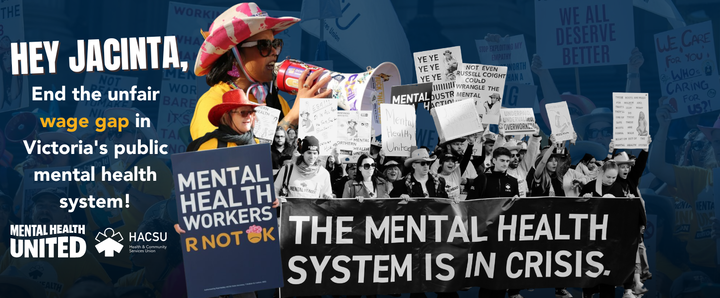 End the Pay Gap for Social Workers and Occupational Therapists in the Public Mental Health SystemEvery day, social workers and occupational therapists stand alongside nurses in Victoria's public health system. We work in the same hospitals. We care for the same patients. We respond to the same crises. We help people recover, stay safe, and rebuild their lives. Yet we're still paid less. The Fair Work Commission has recognised that allied health professions have been historically undervalued because they are female-dominated professions. Now it's time for Victoria to act. Equal pay isn't about asking for more than we deserve. It's about recognising the value of the work we already do and if things don't change and the Victorian Labor government doesnt provide pay parity with our mental health nursing colleagues, 97% of social workers and occupational therapists will leave the public mental health system. Social workers support people through mental health crises, family violence, child protection concerns, homelessness, trauma, palliative care, and complex discharge planning. Occupational therapists help people regain independence after injury or illness, prevent hospital readmissions, support rehabilitation, identify support within the NDIS and enable people to live safely at home. These aren't "extra" services, they're essential healthcare. When experienced allied health professionals leave because they can earn more elsewhere, patients wait longer, services suffer, and communities miss out. We need the Victorian Government to deliver: • Pay parity with our nursing colleagues where we perform equivalent work and responsibilities. • Fair recognition of the skills, qualifications, and value social workers and occupational therapists bring to public healthcare. • A workforce that can attract and retain experienced clinicians. This isn't just about workers. It's about protecting the future of Victoria's public mental health system for consumers, carers and their families. If you believe every essential mental health professional deserves equal recognition for equal value in the public mental health system, add your name. It's time for pay equity for social workers and occupational therapists.2,193 of 3,000 SignaturesCreated by Health and Community Services Union (HACSU)
 -
.png) Save our group homes!Residential group homes are an essential public service for individuals living with disabilities. Homes provide a safe environment, supported by public sector workers who have dedicated their careers to caring for individuals with high support needs. Privatising these services will force families to make agonising choices, separate clients from carers and leave 400+ public sector workers without jobs.1,920 of 2,000 SignaturesCreated by CPSU CSA
Save our group homes!Residential group homes are an essential public service for individuals living with disabilities. Homes provide a safe environment, supported by public sector workers who have dedicated their careers to caring for individuals with high support needs. Privatising these services will force families to make agonising choices, separate clients from carers and leave 400+ public sector workers without jobs.1,920 of 2,000 SignaturesCreated by CPSU CSA
-
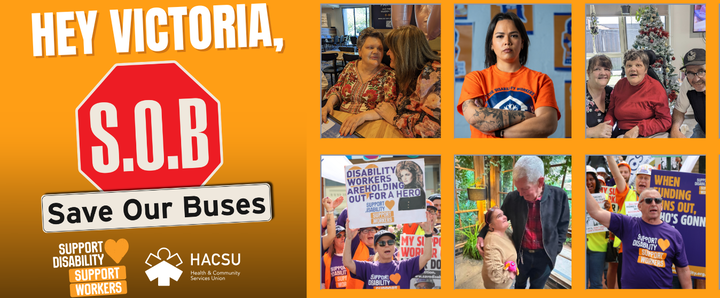.png) Save Our Buses - Stop the Scope Transport Sell-Off!!This issue matters because transport is not optional for people living in supported disability accommodation — it is a fundamental support that determines whether people remain connected to their communities or become isolated within their own homes. For many residents, these buses are the only safe, reliable, and accessible way to attend medical appointments, participate in community activities, visit loved ones, shop for essentials, and maintain the independence, dignity, and routine that most people take for granted. The sale of these buses risks dramatically reducing residents’ access to healthcare, social participation, and community connection, increasing loneliness, dependence, and exclusion. Without reliable transport, people may miss appointments, withdraw from activities, lose confidence, and experience a serious decline in quality of life. For some, this decision could effectively leave them trapped at home, prisoners in their own accommodation with little meaningful access to the outside world. What makes this decision even more concerning is that these buses were originally provided to Scope at no cost by the Victorian State Government to support inclusion and community access for people with disability. Selling off assets intended to improve the lives of supported independent living residents, while withdrawing a critical service many depend on, sends a troubling message about priorities particularly on the backdrop of the Victorian Disability Sector Crisis. Share this petition to demand that Scope halt the sell off and the Victorian State government intervene!1,798 of 2,000 SignaturesCreated by Health and Community Services Union
Save Our Buses - Stop the Scope Transport Sell-Off!!This issue matters because transport is not optional for people living in supported disability accommodation — it is a fundamental support that determines whether people remain connected to their communities or become isolated within their own homes. For many residents, these buses are the only safe, reliable, and accessible way to attend medical appointments, participate in community activities, visit loved ones, shop for essentials, and maintain the independence, dignity, and routine that most people take for granted. The sale of these buses risks dramatically reducing residents’ access to healthcare, social participation, and community connection, increasing loneliness, dependence, and exclusion. Without reliable transport, people may miss appointments, withdraw from activities, lose confidence, and experience a serious decline in quality of life. For some, this decision could effectively leave them trapped at home, prisoners in their own accommodation with little meaningful access to the outside world. What makes this decision even more concerning is that these buses were originally provided to Scope at no cost by the Victorian State Government to support inclusion and community access for people with disability. Selling off assets intended to improve the lives of supported independent living residents, while withdrawing a critical service many depend on, sends a troubling message about priorities particularly on the backdrop of the Victorian Disability Sector Crisis. Share this petition to demand that Scope halt the sell off and the Victorian State government intervene!1,798 of 2,000 SignaturesCreated by Health and Community Services Union -
 Sign the petition: Increase the fuel allowance NOW!We the undersigned, are writing to raise serious concerns about the combined impact of rising petrol prices, and inadequate award travel allowances payable to disability support workers. As you are no doubt aware, disability support workers are an essential workforce. Their work is inherently mobile. Workers are required to travel between multiple participants each day, often across significant distances, at all hours, and in locations where public transport is not a viable option. As a result, the vast majority rely on their own vehicles to deliver NDIS-funded supports. Sustained increases in petrol prices following the conflict in Iran have substantially increased the out-of-pocket costs borne by our members. However, neither the award travel allowance nor NDIS pricing arrangements adequately reflect this reality. The current award travel allowance only $0.99 per kilometre does account for sustained increases in petrol prices. As fuel costs rise, the real value of these allowances erodes further, effectively resulting in a reduction in workers’ take-home pay. At the same time, NDIS pricing settings do not provide a mechanism that meaningfully responds to sharp increases in fuel costs. While pricing models recognise labour and some operational costs, they do not adequately account for real-world travel expenses borne by workers. This situation is unsustainable. It is contributing to financial stress for workers, and ultimately undermines service continuity and choice for people with disability when workers are forced to consider working elsewhere due to increased out of pocket transport costs. In the immediate term, we urge the NDIA to work with Government, providers and unions to introduce an interim travel loading payable to disability support workers within NDIS pricing to respond to fuel price volatility. An interim loading would provide immediate relief while longer-term pricing and industrial issues can be addressed. Such a loading would be linked to recognised fuel price indicators to ensure it reflects real-world costs applied on a temporary basis while petrol prices remain elevated. Such an approach would be consistent with the way in which the sector sought to address financial implications on workers in the sector during the Covid-19 pandemic. Disability support workers perform skilled, complex and demanding work that is central to the success of the NDIS. They should not be expected to absorb escalating fuel costs simply to keep the Scheme functioning604 of 800 SignaturesCreated by Australian Services Union
.png)
-
 Hands off Clare House!This is not just about a building. It is about protecting the dignity, comfort, and wellbeing of some of our most vulnerable community members. Please sign this petition to tell the government that mental health services deserve better, and that consumers, their families, staff and the community deserve a say.634 of 800 SignaturesCreated by Health and Community Services Union TAS (HACSU)
-
Rural Young People deserve mental-health crisis careYoung people in the Hume and Riverina regions currently have no access to local, age-appropriate acute inpatient mental health care. When adolescents experience severe mental health crises, they are too often admitted to adult wards, left for extended periods in emergency departments, or transported hours away from their community by family or patient transport, even when there is an immediate danger to themselves. These arrangements are clinically inappropriate, distressing, and inconsistent with trauma-informed standards of care. They disrupt schooling, separate families, and increase the risk of further harm - emotionally, socially and physically. Albury–Wodonga is centrally positioned to reduce unsafe travel distances across both Victoria and New South Wales, while easing pressure on already stretched metropolitan services. This is about safety, equity, and ensuring crisis care is available close to home when it is needed most.538 of 600 SignaturesCreated by katie kendall
-
 LGH: Pay rises before parking pricesHealthcare workers at the Launceston General Hospital are being hit with an almost 70% increase in parking fees. This isn’t a small adjustment – an extra $520 a year is a massive cost increase on people who already struggle to find affordable, reliable parking just to get to work. What makes this even worse is the timing. During bargaining, workers have missed out on wage increases because the government has refused to put a fair offer on the table. In the last 12 months, healthcare workers have faced growing wage disparity with the mainland, seeing the gap for their wages widen from 5.92% to 9.8%. For many healthcare workers, parking isn’t optional. If you’re on early shifts, late finishes, or rotating rosters, public transport often isn’t a realistic alternative. That means this decision becomes a direct cost-of-living hit for the very people who keep our hospital running. Healthcare workers deserve respect and fairness, not another financial burden. The government must act to commit to treating workers properly by covering the fee increase and maintaining the arrangement with workers of parking costing $3 per day.371 of 400 SignaturesCreated by Health and Community Services Union TAS (HACSU)
 -
 Medicare for Seasonal WorkersPeople from the Pacific Islands and Timor Leste that come to work in Australia on the Pacific Australia Labour Mobility (PALM) Scheme do not have access to Medicare. Instead they are required to pay for private health insurance arranged through their employer. Too often the complexity of using private health insurance or lack of support from their employer results in workers not getting the vital medical care they need.600 of 800 SignaturesCreated by Mark Zirnsak